
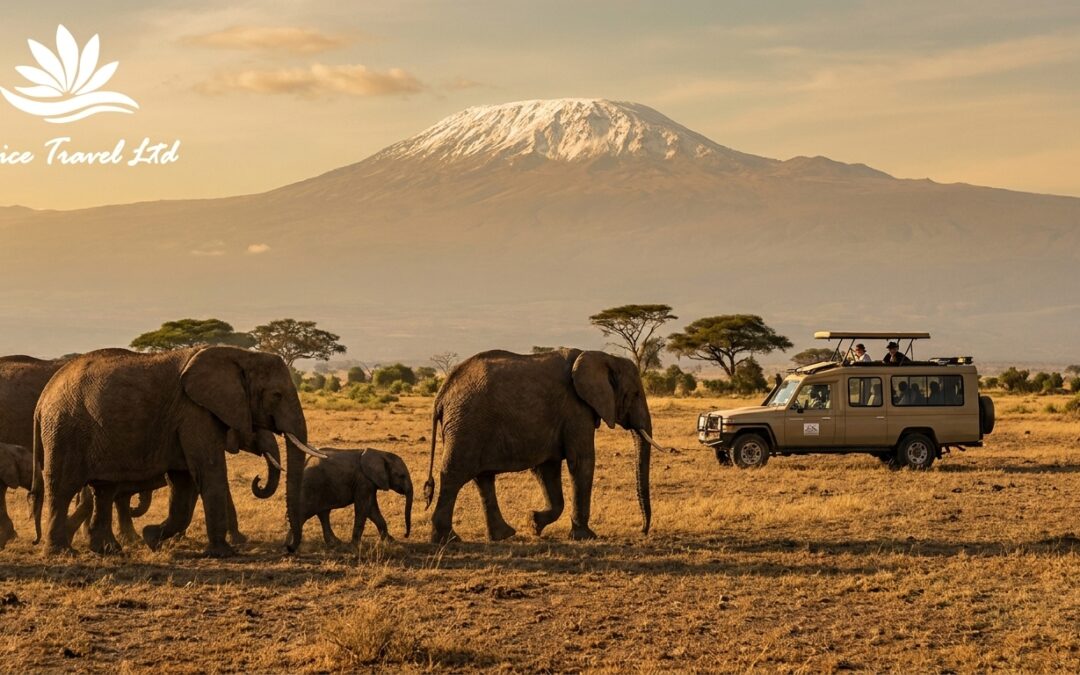
Most Kenya safari guides describe Amboseli in a similar manner. They mention the elephants (they’re spectacular). They mention Kilimanjaro as a backdrop (on a clear day, it stops you in your tracks). Then they list a few lodges and call it done.
What they skip is the practical stuff. When exactly is the best time to go? What does a realistic day on safari actually look like? What does a proper safari package include versus what gets added on as “extras” after you’ve already booked?
That’s what we’re covering here.
Why Amboseli Is Worth Prioritising
Amboseli National Park sits in southern Kenya, close to the Tanzanian border, roughly four hours by road from Nairobi. At around 400 square kilometres, it’s not the largest park in Kenya — but it has one of the highest concentrations of elephants you’ll find anywhere on the continent.
The Kenya Wildlife Service manages the park, and Amboseli is one of the best-studied elephant populations in the world. Researchers have been documenting these herds for decades. What that means for visitors is that the elephants here are generally calm around vehicles. You can watch entire family groups — mothers, calves, young bulls — move, feed, and interact at close range without the animals being disturbed by your presence.
Combined with Mount Kilimanjaro as a backdrop (Tanzania’s peak but perfectly visible from Kenya’s side of the border), Amboseli produces some of the most photographed wildlife images in the world.
But the park is more than elephants. Amboseli also has large lion prides, cheetahs, Cape buffalo, zebras, wildebeest, and over 400 bird species. The Ol Okenya and Enkongo Narok swamps in the middle of the park support hippos and waterbirds year-round. If you’re lucky, you might also catch a lion hunt — or watch a cheetah work the open plains in the early morning light.
When Is the Best Time to Visit Amboseli?
Amboseli has two dry seasons and two wet seasons each year. Here’s how they break down:
January to March (short dry season): Good visibility, less mud on the tracks, and animals tend to concentrate around water sources. A solid time to visit.
July to October (long dry season): This is widely considered the best time for wildlife viewing. Vegetation is sparse, which makes animals easier to spot. Kilimanjaro tends to be clearest in the early mornings before cloud builds up. If you can only go once, lean toward this window.
April to June (long rains): The park gets green and lush — genuinely beautiful. Some tracks become difficult or impassable after heavy rain, but visitor numbers drop, prices are often lower, and you can have entire areas to yourself. Birding is exceptional during this period.
November (short rains): Similar to the long rains but shorter. Workable for experienced safari-goers, but newcomers may find the conditions frustrating if they hit a particularly wet spell.
What a Typical Day on Amboseli Safari Looks Like
Most safari lodges in Amboseli run two game drives per day — an early morning drive starting around 6am and an afternoon drive starting around 3:30pm to 4pm. These are the golden hours when animals are most active and the light is best for photography.
Morning game drive: You’re out before sunrise. The temperature is cool, sometimes cold enough for a jacket. Within the first hour, you’ll typically encounter elephants moving toward water, birds calling from the acacia trees, and, if you’re near the swamps, hippos heaving themselves out onto dry ground. This drive usually lasts three to four hours.
Midday: Back at the lodge. Lunch, rest, swimming pool if the lodge has one, or optional guided walks. Some lodges also offer cultural visits to nearby Maasai communities during this time.
Afternoon game drive: The light turns golden from around 4pm. Predators become more active. Lions that have been sleeping through the midday heat start to move. If you haven’t seen a cheetah yet, this is the drive where they tend to appear on the open plains.
What to Look for in an Amboseli Safari Package
Not all safari packages are built the same. Here’s what a proper one should include — and what to watch for when comparing options.
Included in most genuine packages:
- Park entry fees (currently managed by KWS — check current rates at kws.go.ke)
- Accommodation (lodge or tented camp, clearly specified)
- Meals (most Amboseli lodges offer full board — breakfast, lunch, and dinner)
- Game drives in a 4×4 vehicle with a qualified guide
- Transfer from Nairobi or the nearest airstrip
Common add-ons that sometimes aren’t in the base price:
- Hot air balloon safaris (a significant extra cost but unforgettable if the budget allows)
- Bush meals or sundowner drinks (often charged separately)
- Maasai cultural visits
- Single supplement fees (important if you’re travelling alone)
- Tips for guides and lodge staff (customary in Kenya)
When you get a quote from any operator, ask specifically whether park fees are included. Some operators quote accommodation costs only and add park fees at checkout, and the difference can be several hundred dollars on a three-night trip.
At Spice Travel, our safari packages are priced transparently. We’ll tell you exactly what’s in and what’s not before you confirm anything. You can also explore our broader Kenya tours for options that combine Amboseli with Masai Mara, Tsavo, or Nairobi stops.
Getting to Amboseli from Nairobi
By road: About 240 kilometres from Nairobi. In good condition, the drive takes three and a half to four hours. The road has improved significantly in recent years. This is the most common option for budget and mid-range safaris.
By air: Charter flights operate between Wilson Airport (Nairobi) and Amboseli’s airstrip. Flight time is around 45 minutes. More expensive, but worth considering if you’re short on time or combining multiple parks.
If you’re driving yourself, a 4×4 is strongly recommended inside the park. The tracks — especially near the swamps — can be soft even in dry conditions.
FAQs About Amboseli Safari
Q: Is Amboseli good for a first-time safari? Yes — it’s one of the most recommended starting points in Kenya. The elephants are abundant and approachable, the landscape is dramatic, and the park is small enough that you won’t spend hours driving without sightings.
Q: How many nights should I spend in Amboseli? Two nights is the practical minimum. Three nights gives you more flexibility and a better chance of varied sightings across different areas of the park.
Q: Can I combine Amboseli with Masai Mara? Absolutely. Most combined itineraries use a domestic flight between the two parks. Driving is possible but long. We can put together a combined itinerary — contact us through our Contact page.
Q: What should I pack for Amboseli? Neutral colours (khaki, olive, brown — not white, which attracts dust and disturbs animals). Layers for the mornings. A good camera if you have one. Sunscreen, a hat, and comfortable closed-toe shoes for any walking. Binoculars are useful but not essential — your guide will know exactly where to stop for the best views.
Q: Is Amboseli safe? Yes. Amboseli is a well-established park with good security. Standard safari precautions apply — don’t leave the vehicle unless instructed by your guide and follow park rules.