
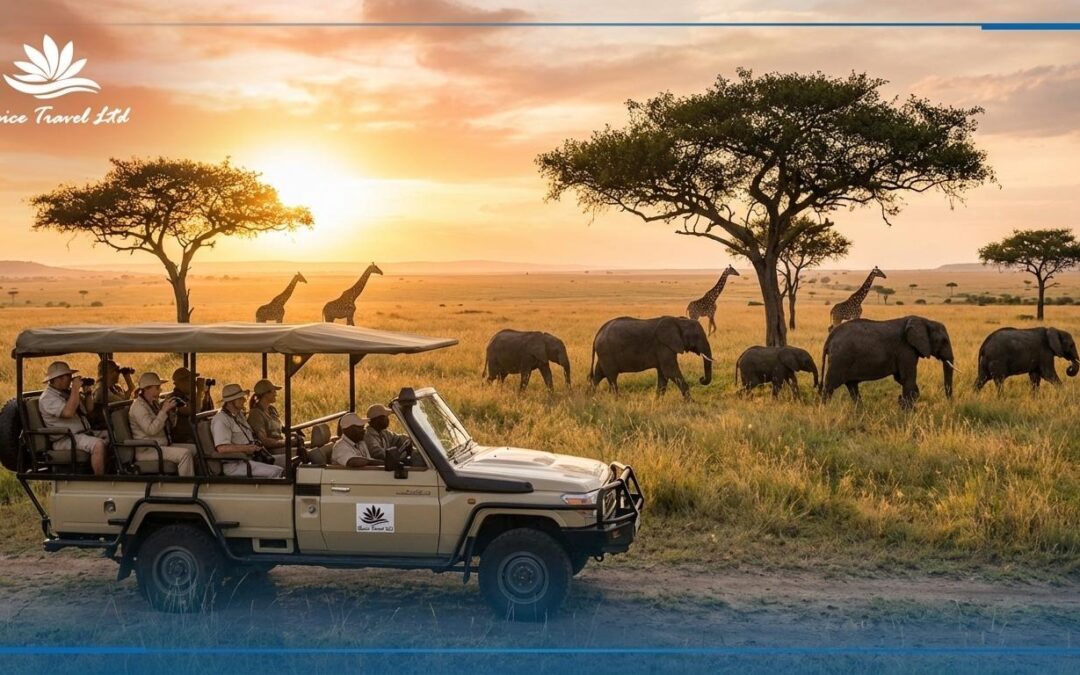
There is a moment — somewhere between your first sunrise game drive and watching a lion move silently through tall grass — when Kenya stops being a destination and becomes something personal. We have seen it happen to guests again and again, and it never gets old.
For first-time visitors, the challenge is getting there. Parks, packages, seasons, lodges — the choices pile up fast. Many travellers prefer organised Kenya safari tours because they simplify the logistics — park permits, accommodation, transfers, and wildlife seasonality are all handled in one place. This guide covers what actually matters when planning your first trip.
When Is the Best Time for Kenya Safari Tours
Kenya’s two dry seasons — January to March and July to October — are when most experienced travellers choose to visit. Vegetation thins, animals gather near water, and game drives become significantly more rewarding. July through October stand apart: this is when the Great Wildebeest Migration crosses from Tanzania’s Serengeti into Kenya’s Masai Mara, drawing roughly 1.5 million wildebeest alongside zebras and gazelles. If you are considering Masai Mara safari packages and the migration is on your list, book months in advance — the best camps fill up fast.
For current entry requirements and seasonal travel advisories, check the official guidance from the Kenya Tourism Board.
How Many Days Are Ideal for a Kenya Safari?
Four to seven days is the most practical range for a first trip. A four-day stay in the Masai Mara gives you enough time for three or four game drives and a proper feel for the place. Seven days opens up a multi-park circuit — combining the Mara with Amboseli or Lake Nakuru, for instance. Those with ten days or more can add Tsavo or Samburu, which shifts the trip from a great experience into a genuinely comprehensive one.
Top Safari Destinations in Kenya
Masai Mara National Reserve
The obvious starting point — and for good reason. Year-round big cat sightings, the annual migration, and a scale of wildlife that genuinely earns the reputation. Busy in peak season, but the sightings more than justify it.
Amboseli National Park
Large elephant herds against a backdrop of Kilimanjaro — on a clear morning, the light and the scale of it are hard to overstate. A favourite among photographers.
Tsavo National Parks
One of the largest wildlife areas in the world, and notably quieter than the Mara. The red elephants — their colour from iron-rich volcanic soil — are unlike anything found elsewhere in Kenya.
Lake Nakuru National Park
Excellent for rhino sightings — both black and white — and famous for its flamingo-lined shores. Works well as a stopover between Nairobi and the Mara.
Samburu National Reserve
Northern Kenya feels entirely different — arid, remote, and home to species found nowhere else: Grevy’s zebra, reticulated giraffe, and Somali ostrich. Worth every kilometre if you have the time.
Understanding Safari Packages in Kenya
Budget safari packages Kenya — Same parks, same animals. Trade-offs are in group size and accommodation comfort. A solid choice for flexible travellers who want to experience Kenya wildlife safari tours without stretching their finances.
Mid-range packages — Our most popular tier. Comfortable lodges or tented camps, dedicated guides, and enough structure to feel properly looked after. Kenya safari trip packages at this level consistently deliver the best balance for first-time visitors.
Luxury Safari Kenya — Private game drives, exclusive camps, luxury safari lodges offering premium hospitality and guided experiences. The camps we partner with at this level are among the finest on the continent.
Working with knowledgeable Kenyan safari tour operators makes a real difference. Travellers can explore our full range of professionally organised Kenya safari tours — including hotel booking, visa assistance, flight booking, airport transfers, car hire, and travel insurance — on our services page.
What to Pack for Kenya Wildlife Safari Tours
Neutral clothing (khaki, olive, and beige), layers for cold morning drives, SPF 50 sunscreen, a hat, quality sunglasses, and good binoculars. Kenya is malaria-endemic — consult your GP before travel and carry insect repellent. Medical evacuation travel insurance is not optional when you are in remote national parks.
Visa and Health Requirements for Travellers
Kenya operates an Electronic Travel Authorisation (eTA) system — apply online before you travel. A yellow fever vaccination certificate may be required depending on your departure country. Hepatitis A and B, typhoid, and a tetanus booster are all worth discussing with your doctor well ahead of your departure date.
Responsible Wildlife Tourism in Kenya
When you join one of our safari packages in Kenya, we ask guests to keep a respectful distance from animals, remain in the vehicle unless a ranger advises otherwise, and never feed wildlife. Beyond that, choosing operators who work in genuine partnership with local communities – Maasai, Samburu, and Turkana – ensures your visit contributes meaningfully to both conservation and the people who have long been its custodians.
Final Thoughts on Planning Kenya Safari Tours
Knowing how to plan the perfect Kenya safari comes down to a few clear decisions. You’ve got to pick the right season, the right destinations, a package that fits your travel style, and a team that knows what they are doing. At Spice Travel Kenya, we have arranged trips for solo travellers and large groups across every corner of this country. Whatever you are looking for, we have almost certainly done it before.
Browse our Masai Mara safari packages, multi-destination circuits, and tailor-made Kenya safari trip packages on our services page, or reach out directly via our contact page. No pressure — the best trips usually start with a simple conversation.
Ready to go? Explore our Kenya safari tours and packages — we would love to help.