
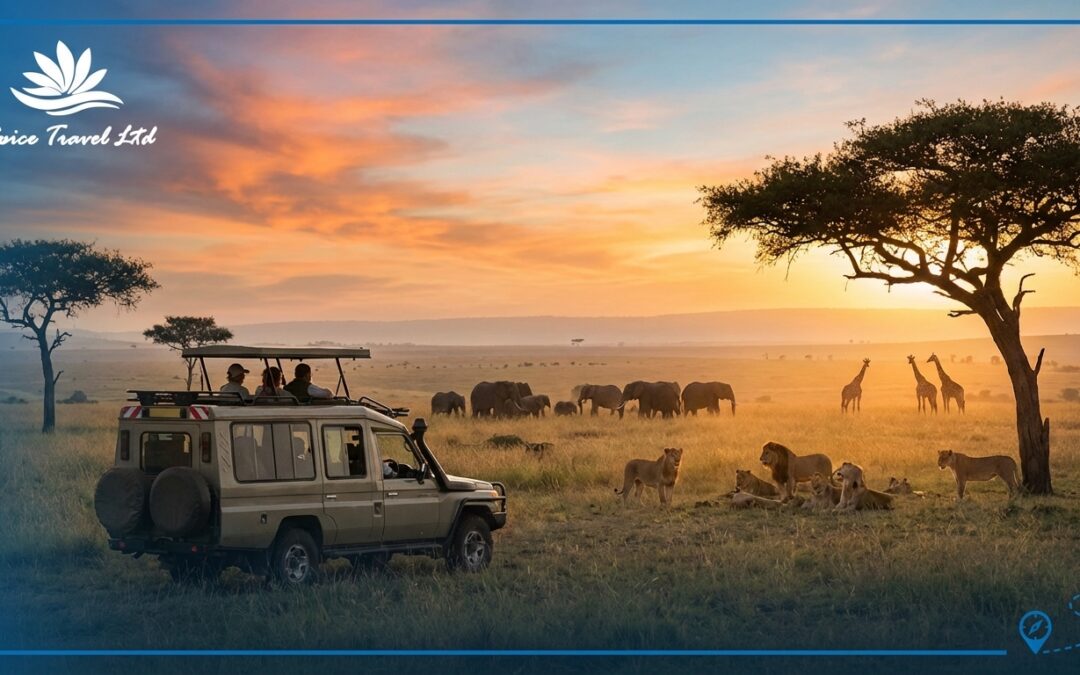
We get asked about the Masai Mara more than almost any other destination. And honestly, we are never surprised. Something about this place gets under people’s skin long before they actually arrive. Maybe it is the footage they have seen, or something a friend said over dinner about a river crossing they witnessed at dawn. Whatever it is, by the time someone calls us to start planning, they already feel a connection to a place they have never been.
What surprises most people is how much there is to think through before booking. This Masai Mara Safari Guide: What Travellers Should Know Before Booking is our attempt to lay it all out honestly — the timing, the trade-offs, the things that genuinely matter versus the things that do not. We have pulled it together from years of putting clients on the ground in the Mara and from listening to what they told us worked and what they wished they had done differently. If you want to start browsing options now, our Kenya safari tours page is a good place to begin.
What Makes the Masai Mara Worth the Journey
Kenya has remarkable wildlife destinations. Amboseli on a clear morning with Kilimanjaro behind the elephants. Samburu, with its dry riverbeds and northern species, you will not see anywhere else. Tsavo East, vast and red and austere. We love all of them. But clients who have done the Mara always say the same thing – it is different.
Part of it is the sheer scale. The Mara’s open grasslands stretch further than your eye can follow. Part of it is the density — resident lion prides, cheetah mothers with cubs, and leopards draped over a fig tree in the afternoon heat. And then there is the border with Tanzania’s Serengeti, which turns the whole ecosystem into something of a different order entirely.
The Great Migration is what draws many travellers here for the first time — over a million wildebeest moving north from the Serengeti between July and October, with the Mara River crossings as the centrepiece. We have had clients describe standing at the river watching a crossing as one of the most visceral experiences of their lives. The chaos, the sound, the crocodiles — it is genuinely unlike anything else. But even outside migration season, the Mara delivers.
Conservation is central to why the Mara remains what it is. The Kenya Wildlife Service oversees wildlife protection and park management across Kenya’s reserves. Their work — and the broader community conservancy model around the Mara — is a significant reason the ecosystem has held together as well as it has.
When to Go — It Really Does Depend on What You Want
People often ask us: “What is the best time to visit the Mara?” The truthful answer is that there is no single correct response — it depends entirely on what you are hoping to experience. Each season has a genuine character of its own.
July to October — If the migration is the point
Book early. That is the single most important piece of advice for this period. The best-positioned camps along the Mara River fill months ahead, and trying to piece together a last-minute trip during peak season tends to end in compromise. The crossings themselves are unpredictable — you can sit at the river for two hours and see nothing, then witness something extraordinary in the next twenty minutes. That unpredictability is part of it, but the payoff when it happens is worth every hour of waiting.
January to March — Quieter, Cheaper, and Often Underrated
This is a season we recommend far more often than most clients expect. The short rains have done their work, the grass is green but manageable, and the predator populations are highly active. Resident lion prides have cubs from the post-rain period. Cheetah sightings are excellent. Visitor numbers are lower — noticeably so in some areas — and rates at many camps reflect that. Travellers who are flexible on timing and not specifically chasing the migration often get some of the best experiences of their lives in January and February.
April to June — For Those Who Do Not Mind the Rain
The long rains arrive in April and ease by June. Some camps close. Certain tracks get challenging. Visitor numbers drop dramatically, and the Mara takes on a particular quality — deep green, dramatic skies, and a quiet that feels almost private. Birdlife is extraordinary during this period. Rates are often at their lowest. For birdwatchers and photographers especially, this is seriously worth considering.
Types of Masai Mara Safari Packages — Finding the Right One for You
The range here is genuinely broad. Budget camping at one end; ultra-luxury tented suites with private plunge pools at the other. Most travellers land somewhere in the middle, but knowing the main categories helps considerably when you are trying to work out what suits you.
Group Departures
Joining a fixed-departure group safari is the most cost-effective route into the Mara. Costs are shared across the vehicle, itineraries are set, and the logistics are handled completely. These work very well for solo travellers and couples who are flexible on timing. Quality varies more than people realise — working with a reputable Kenyan safari travel agency is the most reliable way to avoid the less-professional end of the market.
Private Safaris
For families, honeymoon couples, or anyone who simply wants their own vehicle and guide, Private Safari Tours Kenya changes the experience entirely. You decide when the drive ends. You can spend an extra hour with a leopard and her cubs without worrying about the rest of the group. You eat when you want to. The premium is real, but for many travellers it is absolutely the right call—particularly for families with young children who need more flexibility.
Fly-In Packages
The drive from Nairobi to the Mara takes roughly five to six hours on a good day. The flight from Wilson Airport takes forty-five minutes. For travellers on shorter itineraries or those who simply prefer to maximise time in the reserve, flying in is worth serious consideration. Most camps serving fly-in clients include airstrip transfers and all meals, so the total package often represents better value than it first appears.
Travellers who want to explore the full range of available Masai Mara safari packages — from mid-range group options to fully private fly-in itineraries — can see what we have put together on our services page. Our consultants are on hand to walk through the options with you.
Choosing a Safari Operator — What We Actually Look At
This might be the most important section in this entire guide. The safari itself — the vehicle, the guide, the camp, how the day is run — is almost entirely determined by the operator behind it. A mediocre guide in a well-positioned camp will still give you a forgettable experience. An exceptional guide in modest accommodation can make a trip you talk about for the rest of your life.
When assessing Kenyan safari tour operators, the guide question is the one we start with. Ask directly: Who will be guiding? How many years have they spent in the Mara specifically? Do they hold a Kenya Professional Safari Guide accreditation? A good operator will answer these questions without hesitation.
Beyond guides, look at the vehicles. Four-wheel drives should be well-maintained and properly equipped – roof hatches or pop-tops for standing game viewing, decent tyres for the Mara’s terrain after rain, and enough space between seats that you are not pressed against a stranger for eight hours. Overcrowded vehicles are a common complaint on budget departures.
And always ask for an itemised breakdown of costs. Reputable Guided Safari Tours Kenya will tell you clearly what is included – park fees, meals, accommodation, and transfers – and what is not. A package that appears cheap but excludes park entry fees can end up costing significantly more than a modestly priced all-inclusive option.
The Practical Stuff That Often Gets Left Until Too Late
Years of running Kenya Wildlife safari tours have given us a clear picture of where first-time visitors come unstuck. These things are worth knowing before you leave, not when you arrive at the airstrip.
- Luggage limits on light aircraft are strict — typically 15kg in a soft-sided bag. Hardshell suitcases do not fit in small cargo holds. Pack accordingly.
- Neutral colours matter on game drives. Khaki, olive, brown, and grey. Bright colours unsettle wildlife and affect other passengers’ experience. Leave the red shirt at home.
- The Mara has limited mobile signal. Some areas have nothing at all. If you have work commitments that genuinely cannot wait, factor this into your planning.
- Malaria prophylaxis is strongly recommended. Speak to a travel health clinic at least four to six weeks before departure — not the week before.
- Yellow fever vaccination may be required depending on where you are travelling from and onwards to. Check current entry requirements carefully — they shift.
Combining the Mara With the Rest of Kenya
Three or four days in the Mara is brilliant. But if your schedule allows for longer, there is a strong case for building a wider itinerary. Amboseli pairs particularly well — the contrast between the Mara’s open plains and Amboseli’s dusty basin with Kilimanjaro behind the elephant herds is striking. The Kenyan coast is another natural addition: a few days in Diani or Watamu after the bush, unwinding with the Indian Ocean in front of you, works remarkably well as a trip structure.
Putting these kinds of multi-destination itineraries together well requires local knowledge — routing, logistics, and accommodation choices that flow sensibly. Kenya Safari Tours that combine two or three ecosystems tend to be the most satisfying trips we organise. Visitors planning broader itineraries can also look through our Kenya tour packages for ideas that span multiple parks and regions across the country.
Before You Book — A Few Last Thoughts
We have been doing this long enough to know that the Masai Mara rarely disappoints. But we have also seen trips fall short — not because of the destination, but because of poor planning, the wrong timing, or operators who were not up to the job. Those are the situations we work hard to help our clients avoid.
This Masai Mara Safari Guide: What Travellers Should Know Before Booking covers the foundations — but your trip will have its own specific requirements, and those are worth talking through properly. When is the right window for your schedule? What type of experience suits you and whoever you are travelling with? Which camps are actually worth the premium, and which are coasting on reputation? These are the questions our consultants deal with every week.
Well-chosen Masai Mara safari packages are the difference between a trip that was fine and one that stays with you for years. If you are serious about doing this properly, get in touch with our team. We will be straight with you about what works, what does not, and what represents genuine value — and we will put together something worth looking forward to.
Plan Your Masai Mara Safari With Spice Travel Kenya