
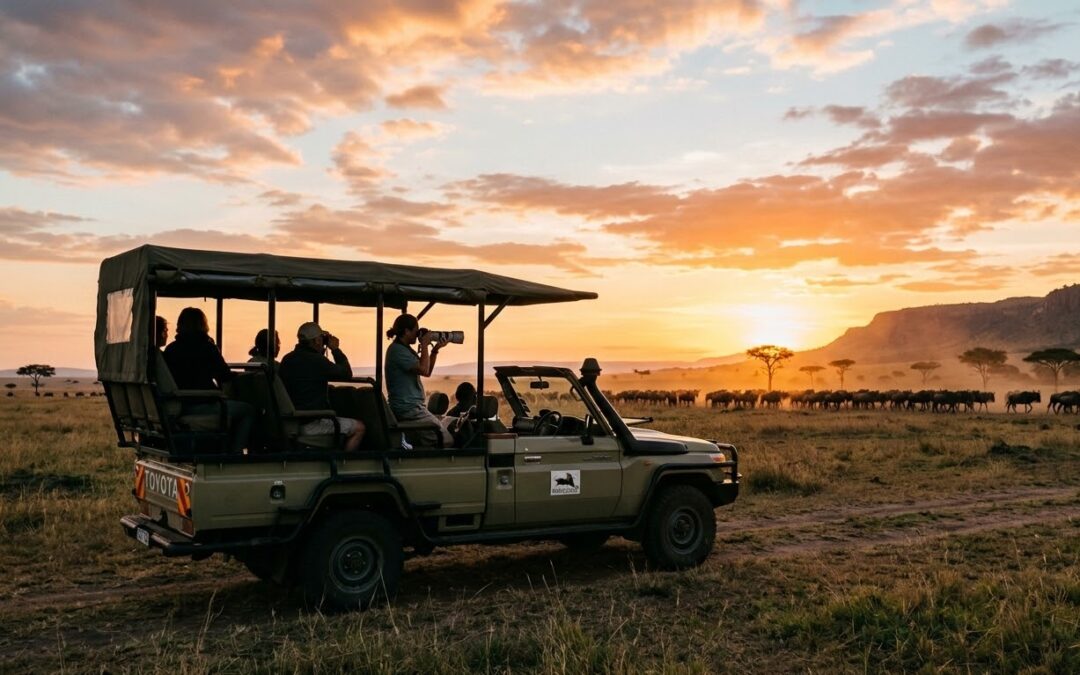
A Kenya safari in September still gets you real Great Migration crossings — just with fewer vehicles at the river.
Every August, we get the same phone calls at Spice Travel. "Is it too late for the migration?" "Did we miss it?" People book their flights for early September, see a headline claiming the migration "ends in August," and panic.
It doesn't end. Not even close.
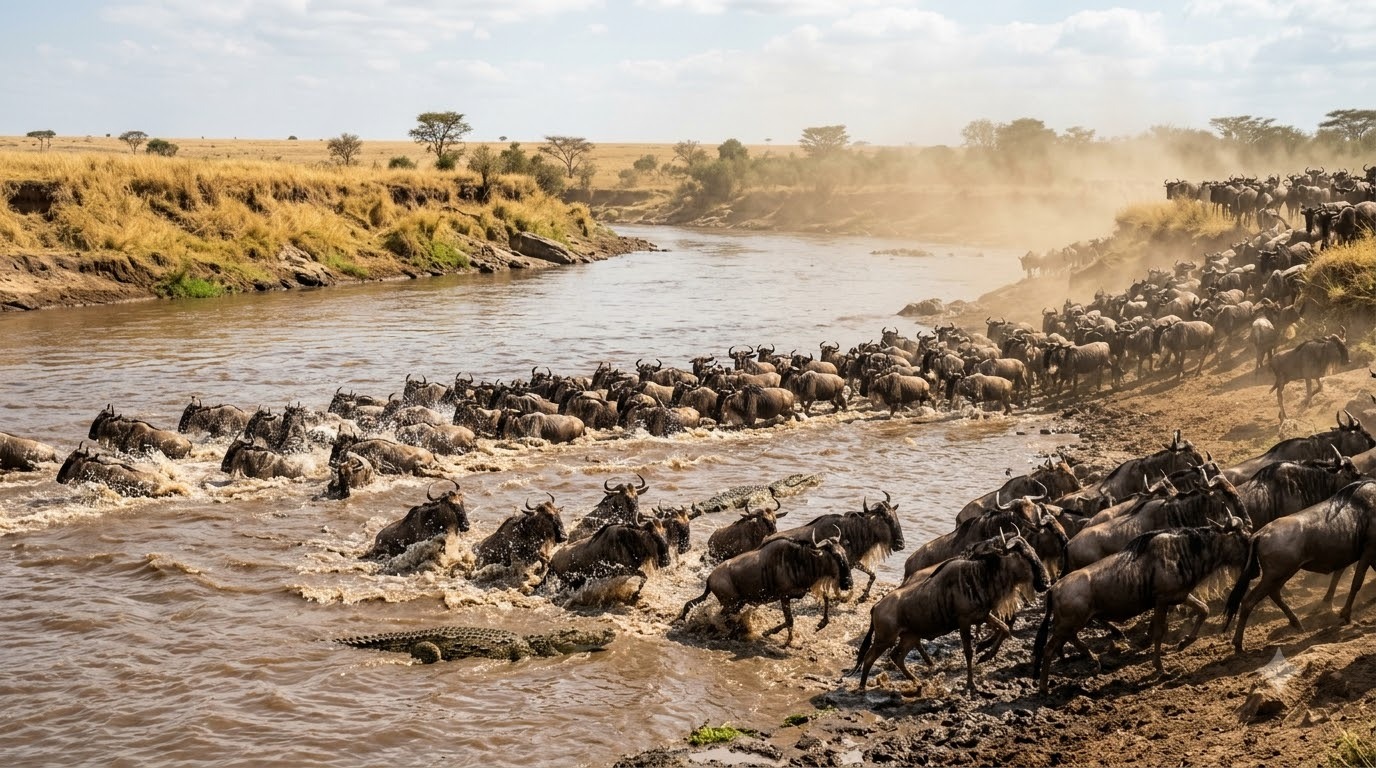
As one of Kenya's longer-running Kenya Tour Operators, we send guests into the Mara through the whole of September and watch them come back with the same photos everyone assumes only July travellers get: wildebeest mid-air over the Mara River, crocodiles waiting below, dust clouds rolling across the plains. If you're weighing up a Kenya safari this September, here's what's actually happening on the ground, and why it might be the smarter month to go.
Nobody Told You the Migration Doesn't Stop in August
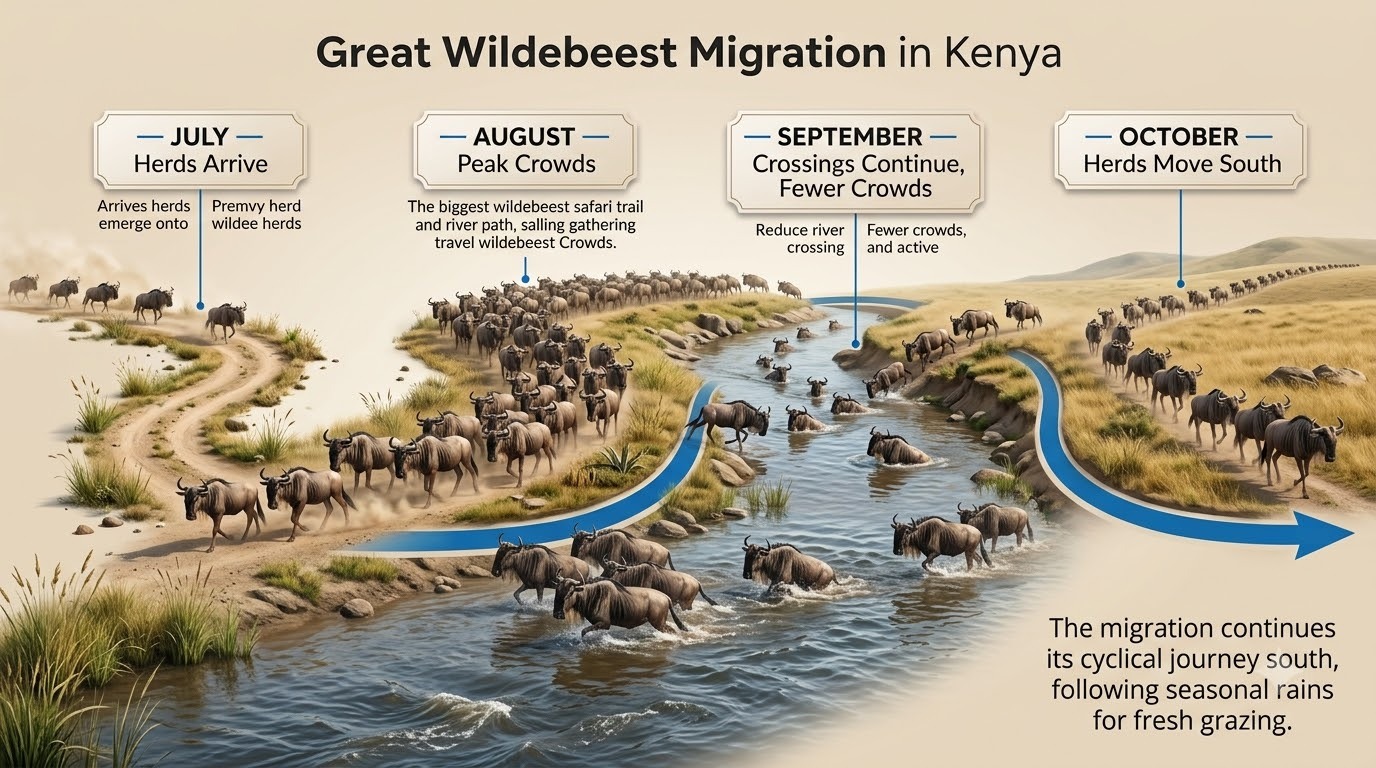
The "wildebeest migration" isn't just a single affair with a definite beginning and end. It takes place throughout the year from Serengeti to Maasai Mara based on the rain and grass, not the calendar. From around July, herds arrive in the Mara and settle there till October, ruminating on the northern plains until the rains make them go back down south.
September sits right in the middle of that window. The herds are already in Kenya. Crossing behaviour at the Mara River and the Talek River continues through the month, often into the second half. What changes isn't whether the animals are there — it's how many other vehicles are parked next to yours watching them.
What September in the Mara Actually Looks Like
Peak crowding hits the reserve in July and August, when school holidays in Europe and North America line up with early migration hype. By September, a good number of those visitors have gone home, but the herds haven't.
| What you'll find | July–August | September |
|---|---|---|
| Wildebeest and zebra herds | Present, arriving | Present, well established |
| River crossings | Frequent | Frequent, into late September |
| Vehicle density at crossing points | High | Noticeably lower |
| Camp and lodge rates | Peak pricing | Often discounted |
| Flight and hotel availability | Booked out early | Easier to secure |
For anyone who wants to actually see the crossing rather than watch the back of someone else's Land Cruiser, that gap in vehicle numbers matters more than people expect.
Where the Crossings Happen
Most of September's action is concentrated around the Mara River in the Mara Triangle on the reserve's western side, and along the Sand River near the Tanzanian border to the south. Both areas sit within reach of camps in the central and southern Mara, which is where we tend to place clients travelling this month.
Resident wildlife doesn't take September off either. The Lion prides are always following the herds closely, the cheetahs at the Mara are most active while on the short grass, and sightings of elephants, buffalos and giraffes are consistent throughout the reserve irrespective of the actions of the wildebeests.
Fewer Crowds, Better Light, Lower Prices
September gives photographers something July can't: breathing room. Fewer vehicles at a crossing means more time to wait for the shot, reposition, or just watch without eleven other jeeps in frame. Morning light is clean and the short rains haven't usually started in earnest yet, so game drives run without the wash-out skies that show up later in the season.
It's also the month where budget-conscious and luxury travellers land in the same place for different reasons. Spice Travel's holiday packages start from KES 25,000 per person, and September's softer demand tends to bring camp and flight prices down from their July–August peaks — useful whether you're booking a family trip or a fully tailored Maasai Mara safari.
Camps and Accommodation for a September Safari
There are options from basic tented facilities to more high-end luxuries in the Mara, with September seeing a dip in occupancy rates across the board. The camps near the Mara Triangle and Sand River are closer to the crossing point and so easier to reach from the lodge.
We build these into our wider Kenya safari packages, matched to budget, group size and how close to the river you actually want to be.
Planning a September Mara Trip
- Book camps early even in the shoulder season — prices drop, but the best-located tents near the crossing points still fill up.
- Pack for both dust and cold mornings — layers matter, as Mara mornings start cool and game drive vehicles are open-sided.
- Confirm park fees in advance — these vary by reserve and change periodically, so check current rates rather than relying on an old blog post.
- Sort your flights and transfers together — booking these alongside your safari avoids the scramble of arranging it separately once you land.
- Ask about conservancy access — some private conservancies bordering the reserve offer night drives and walking safaris the main reserve doesn't allow.
Why It's Worth Booking Through Established Kenya Tour Operators
A September safari has more moving parts than the calendar suggests — timing your route around where the herds actually are that week, matching camps to your budget, coordinating flights, transfers and park permits so nothing collides. That's the part that separates a smooth trip from a stressful one, and it's where working with experienced Kenya Tour Operators pays off rather than booking everything piecemeal.
Spice Travel has operated out of Parklands, Nairobi for more than 30 years, and we're IATA certified, Amadeus-powered and a KATA member — the kind of accreditation that means real accountability if something goes wrong with your flights or ground arrangements. We handle the safari, the flights, the visa paperwork and the airport transfers as one package, with WhatsApp support if your plans change mid-trip.
If you're planning budget-friendly Kenya travel around this year's September flight deals, building the safari in at the same time is usually cheaper than bolting it on afterwards.
FAQ
Is it true that the Great Migration is still a fact in September?
This is correct. Generally, the herds are usually well settled in the Maasai Mara in September and continue with river crossings at both Mara and Sand Rivers during that month.
Is September cheaper than July or August for a Kenya safari?
Generally, yes. Camp rates and flights tend to soften once the July–August peak passes, even though wildlife viewing stays strong.
Do I need to book a September Mara safari far in advance?
Compared to the same travel, the previous months can be safer when looking for camps with the best locations near the crossing points, while September has visibly bigger last-minute availability than the peak season.
Is September considered a good photography month in the Mara?
It's one of the better months. Lower vehicle density at crossings and generally clear morning light give photographers more room to work.
Can Spice Travel arrange flights, visas and the safari together?
Yes. The company is fully IATA certified Kenya Tour Operators which means that all aspects of travelling, including arrangements of flights, passports, accommodation and airport transfers are done seamlessly.
Book Your September Safari Now
The migration hasn't packed up and left — it's still moving through the Mara, just with fewer vehicles watching it happen. If you want a Maasai Mara safari with real crossing action and none of the July crowds, get in touch with Spice Travel and we'll build a September safari around your dates and budget. As Nairobi-based Kenya Tour Operators with three decades in the business, we'd rather talk you out of overpaying for a package than let you find out the hard way. If a Kenya safari in September works better with your schedule than the July rush, we'll build the trip around those dates — flights, camps, transfers, all of it.