

Here's the uncomfortable truth about travel policies: plenty of companies have one, and hardly anyone follows it. Usually it's ten pages long, it lives in a folder nobody opens, and the only person who has read it end to end is whoever wrote it. The fix is a corporate travel policy Kenya businesses can actually follow: short, specific and written down. This post covers what goes in, where policies go wrong, and a simple template you can copy this afternoon.
Why bother writing one
No policy means every trip becomes a small argument. Business class or economy? Who approves it? Is that hotel too pricey? You get a different answer depending on which manager you catch and how their morning is going. Staff notice. Pretty soon they stop asking and just book what suits them.
Write the rules down and most of that goes away. Finance has something to check claims against. Travellers know where they stand before they book, not three weeks later when the claim bounces. And if a flight gets cancelled at 6am, somebody knows who to ring. Costs tend to settle too, but I'd say fewer arguments is the real prize. If you're not sure where your flight money goes right now, our corporate travel budget guide is a decent first stop.
What a corporate travel policy should cover
Approvals and booking
Decide who says yes. One person per type of trip, plus a backup for when they're away, and a deadline. One working day is fair. Without a deadline, requests sit in someone's inbox while the fare creeps up.
Then choose a single way to book. An agent, an in-house travel desk or an approved website will all do, but pick one. Going with an agent? Our corporate travel management page explains how that normally runs, and a corporate travel account keeps tickets off staff credit cards.
Flights, hotels and allowances
Give a default cabin, then say when people may go above it. Most companies use flight length, some use seniority, a few use both. Say whether staff should buy a fare they can change if plans might move (our business class or economy flex guide helps you decide that). For hotels, set a nightly cap for each city you visit often, and say how travellers get in from the airport. If you pay a daily allowance, put the figure in. Then look at it again each year, because a cap agreed in 2019 is one everybody quietly ignores.
Claims
Keep this bit short. Which receipts, how soon, and who checks them. If filing a claim takes longer than the trip itself, people will sit on it for months.
When things go wrong
Cancelled flight, missed connection, lost passport. Who do travellers ring, and who can approve extra spend? One page, both answers. Our corporate flight rebooking playbook covers the first hour. Also keep a list of who is travelling where, with a number to reach them on. Employers also have duties towards staff who travel for work, and the detail depends on your company, so ask a lawyer about that part.

With a policy or without: a comparison
Five things that tend to change.
| Area | No written policy | A short written policy |
|---|---|---|
| Approvals | Depends which manager you catch | Everyone knows who says yes and how long it takes |
| Flights | Each traveller books what they fancy | One default cabin, and a way to ask for more |
| Spending | You find out when the claims land | Limits are known up front, so claims are easy to check |
| When plans change | People improvise and costs pile up | A named contact and a first-hour routine |
| Records | Receipts on phones and in inboxes | Bookings, invoices and approvals in one place |
Want help turning this into your own policy?
Tell us who travels and where to, and we'll talk through your options with you. Call +254 740 633 759 or email sales@spicetravel.co.ke.
A simple corporate travel policy template
Paste this into a document and fill the gaps. One or two sentences per line will do.
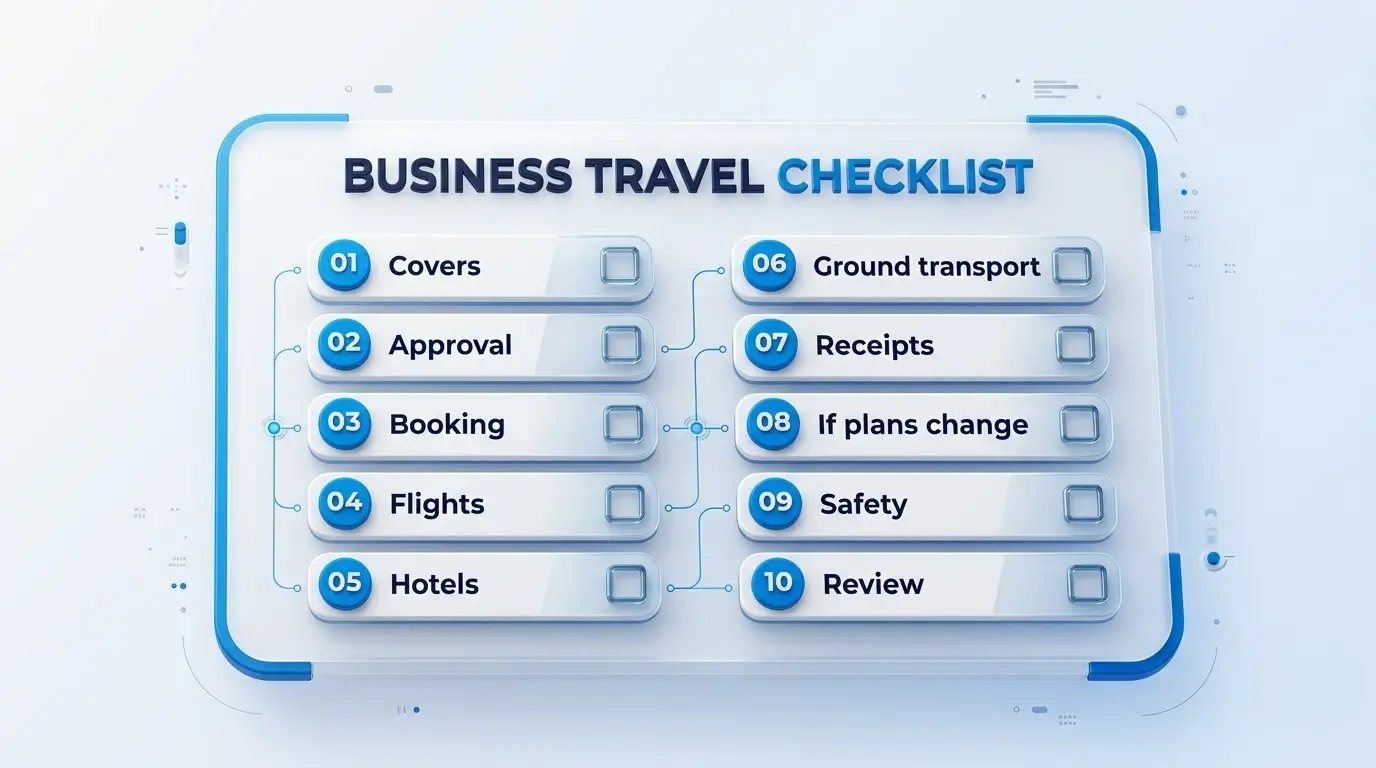
Corporate travel policy: [Company name]
1. Covers: all staff and directors travelling for work.
2. Approval: [Role] approves trips. [Name] is the backup. Answer within [one working day].
3. Booking: all flights and hotels go through [agent, travel desk or portal].
4. Flights: [Economy] is the default. [Business class] is allowed on flights over [number] hours, or when [role] approves it. Buy a [changeable] fare if plans might move.
5. Hotels: up to [KES amount] a night in [city].
6. Ground transport and allowances: [rules and daily allowance].
7. Receipts: keep every one. Claims go in within [number] days.
8. If plans change: ring [named contact and number] first. [Role] approves any extra spend.
9. Safety: leave your itinerary and an emergency contact with [role] before you go.
10. Review: [owner] revisits this every [12 months].
Why people ignore travel policies
Length is the big one. Twelve pages, nobody reads it. Two pages, they might. Close behind are rules nobody can keep. A very strict policy looks tidy on paper, but staff just work around it, so leave a route for exceptions.
Then there's ownership. If nobody's name is on the policy, nobody updates it, nobody answers questions and it slowly goes out of date. Prices and routes move, so check the numbers once a year. And please don't set a limit you won't enforce. If no one ever compares a claim against it, it's decoration.
Rolling it out
Don't just email it round. Take ten minutes with your regular travellers and approvers, find out what annoys them, and fix what doesn't work. Put the contact number on every itinerary. And remember that a cheap fare is easier to find than a rule, so if staff book for themselves, expect some leakage. Sending teams to the same event? Link your group flight booking Kenya process from the policy.
Some companies hand the whole thing to a travel management company. The benefit is that the policy gets applied when the ticket is bought, not checked afterwards.
IATA certified | Amadeus-powered | 30+ years' experience
Frequently asked questions
What is a corporate travel policy?
It's a written set of rules for business trips. It says who approves travel, how flights and hotels get booked, what cabins and limits apply, how people claim expenses and what to do if plans change.
Is a corporate travel policy required by law in Kenya?
Not as far as we know. We're not aware of any law that says every company must have one. Employers do have duties towards their staff though, and a written policy helps show you took them seriously. A lawyer can confirm where your company stands.
How long should a travel policy be?
About two pages. If it won't fit, keep the policy short and put the extra detail in separate guides.
Who should own the travel policy?
Whoever deals with most of the trips, usually HR, admin or finance. What matters is one named person who answers questions and reviews it every year.
Can Spice Travel help us apply our policy?
Yes, get in touch. Send us the policy, your approvers and a list of regular travellers, and we'll tell you how we would handle the booking side. Haven't got a policy yet? Start with the template above and send us the draft.
Where to start
Open a blank document and paste in the template. Don't aim for perfect. Send the draft to two or three regular travellers and one approver and ask what they'd change. A rough policy people use is worth more than a polished one they don't.
Related reads
Keep going with these guides.
Need a corporate travel policy Kenya staff will follow?
Tell us how your team travels today and who approves it, and we'll talk through booking and payment options. Call +254 740 633 759 or email sales@spicetravel.co.ke.