
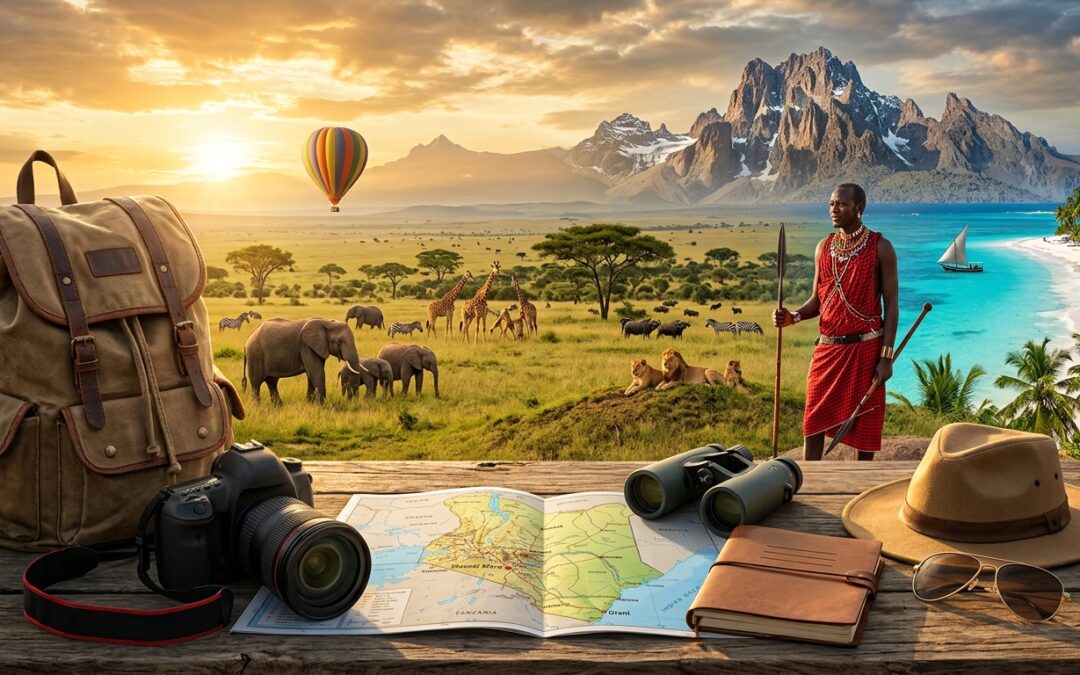
August confuses people before they’ve even landed. They picture Kenya as hot and green, pack accordingly, then step off the plane in Nairobi into 15°C air and wonder if they’ve been sent to the wrong continent. They haven’t. This is just what the dry season looks like near the equator, and honestly, it’s the best month on the calendar if you’re chasing the Great Migration. Below is what I’d actually tell a friend before they book with any tours and travel companies in Nairobi, not the version that reads well on a brochure.
Climate In August
As per the temperature in Nairobi, the daytime temperature remains around the 22°C mark while night temperature can drop as low as 11°C which surprises a lot of travelers.Out on the Mara plains it’s dry and dusty, good for tracking animals, bad if you forgot a jacket. The coast plays by different rules entirely — Mombasa stays humid, around 27°C, and the ocean is at its calmest stretch before the short rains show up in October. Two very different climates, one country, one suitcase. Pack for both.
Safari Season: Why August Is Peak Migration Month
This is really why people fly in now. By August, the elephants and zebras have usually crossed the Mara River half way since they have left the Serengeti in search of better pastures. The crocodiles are all over. Lions and hyenas wait on the banks. It’s brutal to watch and hard to look away from, which is more or less the whole appeal. Amboseli is worth adding too, mainly for the elephants working the swamps with Kilimanjaro sitting in the background — different pace, still worth the detour. What nobody advertises loudly enough: camps sell out months ahead and prices peak right along with the wildlife. Book late and you’ll be choosing from whatever’s left.
Beaches
Most itineraries tack a few coastal days onto the end, and it works. Diani has the white sand everyone’s seen in photos, plus a reef close enough for a decent snorkel. Watamu is sleepier and better for turtles. Lamu takes more effort to reach, but it barely feels like the same country once you’re there — narrow stone streets, dhows, no cars to speak of on the old town side. I’d pick Lamu over Diani if I only had one shot and didn’t mind the extra flight.
Festivals
Nairobi runs a scattering of craft markets and live music through August, and the Rift Valley Festival further pulls a decent mix of East African and international acts. Some Maasai conservancies near the Mara open up cultural visits during migration season too, when there’s enough visitor traffic to make it worthwhile. None of this should be the reason you fly in — but ask your operator to build one evening around it if the dates line up.
What to Pack
Layers. Not the jungle-explorer look most people default to. A fleece and something windproof matter more than khaki does. Neutral colours for game drives, a hat with a real brim, sunglasses that actually block glare, and sunscreen — yes, even when it’s cool, the UV at this altitude doesn’t care about the temperature. Malaria prophylaxis, repellent, a torch for camps that cut power overnight. And binoculars. I can’t stress this one enough; half the wildlife you’ll see is a shape 300 metres away, not the postcard close-up.
Visa
Most travellers apply online now for an electronic travel authorisation before flying, rather than sorting anything on arrival. Give it at least a week — closer to peak season, processing sometimes slows down under the volume. Travel regulations state that a visitor needs to have six months on a passport and, depending on the origin country, to produce a yellow fever vaccination certificate. Because regulations in Kenya change frequently, it is recommended to check the government website before going there instead of relying on a blog that might be outdated.
Budget
Let’s not be shy about this matter, August happens to be the most expensive month for traveling to Kenya. The prices of mid-level safari tours lodges range from $250-$450 per night, while luxury tented camps start from 700 USD.
Domestic flights between parks add up, though honestly they’re worth it against a six-hour drive on rough tracks. Beach add-ons cost far less by comparison. Is it worth paying the peak-season premium instead of coming in June? If the migration timing matters to you, yes. If it doesn’t, you’ll save real money going a month or two either way.
Flights
Jomo Kenyatta International in Nairobi is the main hub, with direct or one-stop options from most of Europe, the Middle East, and a growing number from North America. From there, small charter flights cover the hop to the Mara, Amboseli, or the coast — book these through your ground operator rather than separately, because matching connection times yourself is more fiddly than it sounds.
A Realistic 6-Day Itinerary
Land in Nairobi on day one and don’t overplan it — jet lag plus a possible visit to the Sheldrick elephant orphanage is enough. Fly to the Maasai Mara for days two and three, timed around wherever the herds are sitting that week. Day four moves to Amboseli, elephants and Kilimanjaro views, a slower rhythm than the Mara. The last two days I went to the coast — Diani or Watamu — for doing close to nothing. Six days do not seem like much time to stay in Kenya for a tourist, and yet this is quite sufficient to cover the main tourist attractions that first-time visitors come to see — the big cats, elephants, and places to relax afterward.
How Spice Travel Can Help
Handling this yourself means juggling park permits, charter timing, camp availability during the busiest month of the year, and visa rules that don’t sit still. Spice Travel builds the route around where the herds actually are that week, not a fixed template, and holds relationships with camps that fill up months in advance. When you’re comparing tours and travel companies in Nairobi for an August trip, ask them one direct question: when did they last have someone on the ground checking migration positioning? The answer tells you more than any brochure will.
Conclusion
August rewards early planners. Book the migration-season camps too late and you’ll end up compromising on location, not experience. Sort the visa well ahead, budget for peak pricing without pretending it isn’t peak pricing, and lean on a local operator for the timing decisions that are genuinely hard to call from outside the country. If you are planning to make the trip, contact Spice Travel and inquire about prices for this season’s crossing.
FAQ
Should one opt to visit Kenya in the month of August?
Yes,it’s peak dry season and lines up with the Great Migration river crossings in the Maasai Mara — one of the strongest wildlife months anywhere in Africa. You will have to pay some extra money and at the same time, find the camps busy but it is worth it.
Is it necessary to have a visa when going to Kenya?
Most travellers apply for an electronic travel authorisation online before arrival now. Check the current requirements for your nationality on Kenya’s official immigration site a few weeks before you fly — the process has changed more than once in recent years, so don’t trust anything written before this year.
What are the costs of Safaris in August in Kenya?
On average, the cost one can incur while living in a reasonable hotel or luxury tent is nearly $250-400 per person per day. August sits at the top of the pricing calendar because of migration demand. Making sure to book flights in advance enables travelers to gain the advantages of early booking up to about 3 to 6 months.
Ready to Experience Kenya in August?
Get in touch with our team today and start planning your unforgettable August Kenya safari.